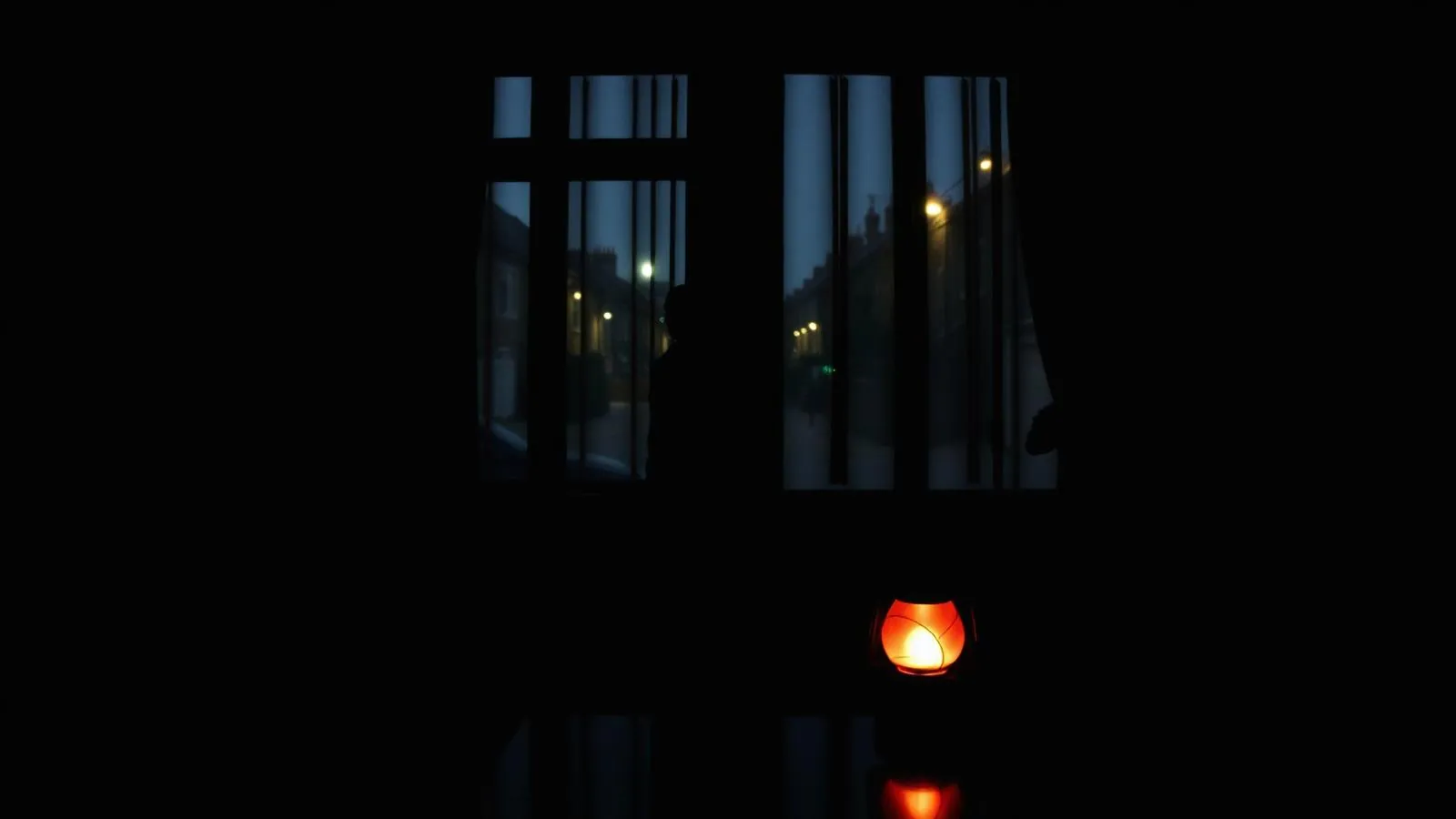
Almost every serious UK emergency is survived at home, not in the woods. Here is the case for sheltering in place — and what it demands of your house.
The instinct in a crisis is to move. It is almost always the wrong instinct. In a British urban emergency — a prolonged blackout, a chemical incident, civil disorder, a supply chain failure — the safest structure available to you is the one you are already standing in. It has a lockable door, four walls, stored supplies, a roof, and a known layout. The street outside has none of those things.
Official UK guidance agrees. The standard public protection instruction issued through the Emergency Alert system and by police for chemical, radiological and firearms incidents is 'Go in, stay in, tune in'. Not 'evacuate'. Evacuation is ordered only when the building itself is the hazard — flood water, fire, structural collapse, or a gas leak.
The reason is simple maths. Roads clog within an hour of a mass movement event. Fuel stations run dry. Mobile networks saturate. A family that leaves without a confirmed destination becomes a family in a queue, in the dark, with whatever fits in the boot. A family that stays has everything they own, plus a locked door.
Sheltering in place has three requirements, and most UK homes fail at least one. First, supplies that do not depend on the grid: water, food that needs no cooking, light, heat and a radio. Second, a way to keep the outside out — a door that cannot be forced in three seconds, ground-floor windows that resist a brick, and a perimeter that discourages opportunists. Third, information: a DAB or FM radio, because when the mobile masts lose backup power your phone becomes a torch with a screen.
The window that matters is roughly seven days. That is the period in which supermarkets empty, emergency services are stretched thinnest, and the behaviour of strangers is least predictable. Beyond it, order tends to reassert itself: supply chains partially restore, information improves, and the risk of being outside drops sharply.
Preparing to stay is also cheaper and less dramatic than preparing to leave. You do not need a bunker or a remote plot in Wales. You need two weeks of food you already eat, ten litres of water per person, a filter, a first aid kit that is not a joke, an off-grid way to charge a phone, and hardware on your doors. That is a weekend of work and it covers the overwhelming majority of realistic scenarios.
Have one written plan on paper: where the household meets if phones are down, who collects the children, which neighbour has a key, and where the shut-off valves are. Then stop thinking about it. Preparedness is a decision you make once, not a hobby you maintain.

AI Threats to Humanity: Separating Risk from Noise
Forget the science fiction. The near-term AI risks that touch a British household are infrastructure, information and employment — and two of them are already here.